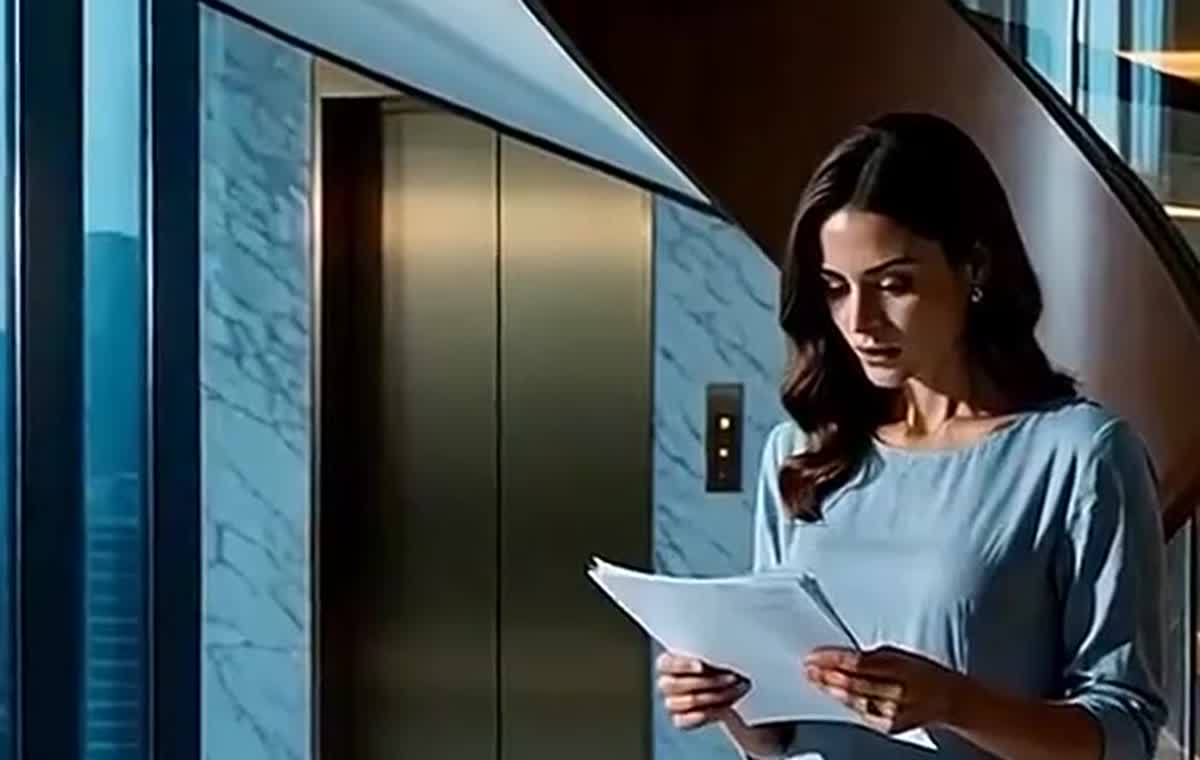
For seventy episodes the show lives in an office, a corridor and an apartment. Then episode 71 opens on a rooftop at night with a skyline, and episode 74 has a car driving, and episode 78 has a wedding hall with two hundred extras. Same series. Same week of shooting, probably.
This is not a coincidence, and once you see the pattern you can predict the last act by the sets.
Why the front is cheap
The first ten to fifteen episodes are free. They are also the ones that get cut into ads and clips. That sounds like a reason to spend money on them, and it is, but only on the first ninety seconds. Everything after the hook is designed to cost as little as possible while retaining you, because the money is not made on episode 6. It is made on episode 40.
Why the back is expensive
By episode 70, everyone watching has paid something. They are the committed audience, and the show now has to deliver the payoff: the wedding that was promised in episode 1, the confrontation in the boardroom, the reveal of who the real heir is. A payoff in an empty corridor does not feel like a payoff, so the production buys a room with a chandelier for one night.
The other reason is churn. The last ten episodes are where people decide whether to start the next series in the same app. A flat ending costs you future revenue, not just this one's. So the money that was saved across seventy episodes gets spent in the final week of shooting, on locations that appear for four minutes each.
The tell
Extras. Count them. In episodes 1 to 70 the background is empty or three people walking past. In the last ten there are crowds, and crowds are the single most visible line item in a low-budget production: every extra is a person who has to be fed and held for a day.
The other tell is the car. A moving car with a conversation inside it means a process trailer or a tow rig, and almost no series in this format has one before the final act. If you see two people talking in a car that is actually moving, you are near the end.
The wedding is the clearest example. An eighty-episode series will spend its entire location budget on one night: a hall, two hundred extras, a string quartet that is actually a playlist, and a cake that appears in exactly two shots. They shoot it in a single overnight session, because the venue is cheaper after midnight, and then they cut it into the last six episodes so it looks like the money was always there.
The series I keep using as my example is on this page. Search code 5626185 gets you in without hunting for it.
Disclosure: I promote this app through a referral link and may earn a commission if you download through it. It costs you nothing extra, and I would say the same things about these shows either way.