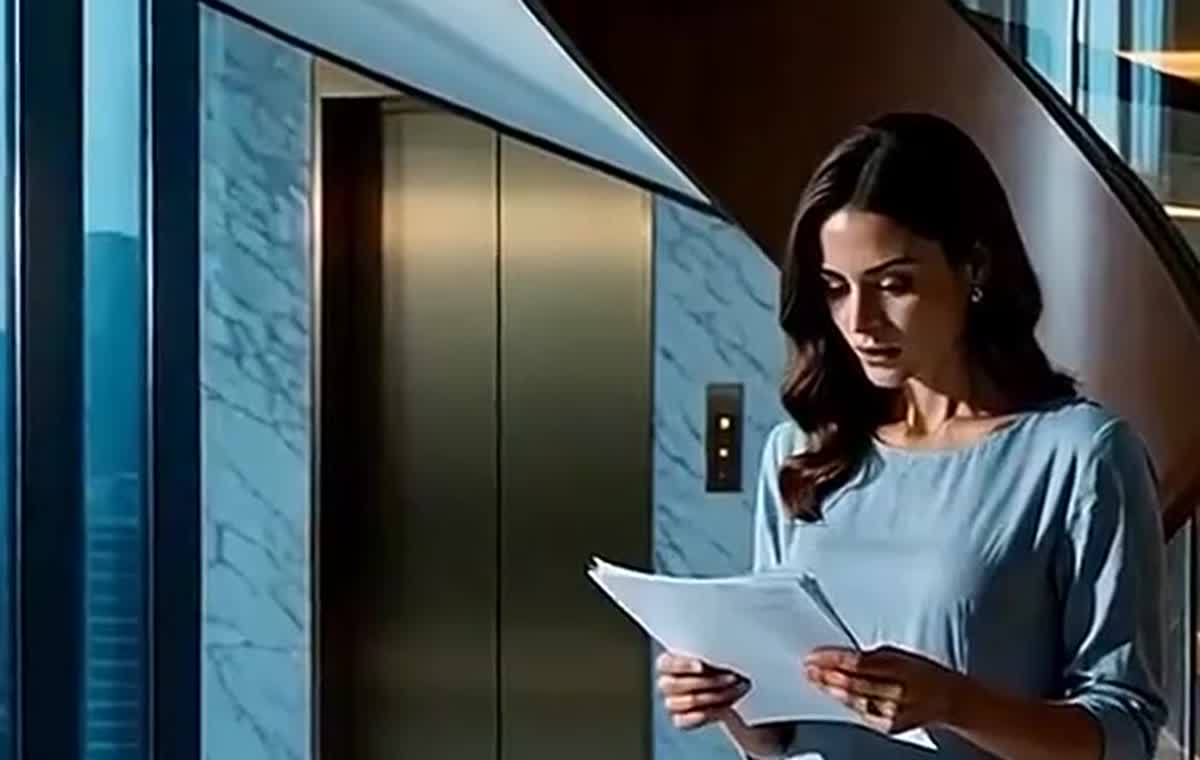
People send me the same scene about once a week, usually with no context and one line of text: watch this. It is under sixty seconds. A woman steps into an elevator in a formal dress. A man she has not seen since her wedding steps in behind her. The doors close.
What the scene withholds
Nothing is explained. Not who he is, not why she left, not what he wants. The scene gives you a dress, a reflection, and two people standing very still. In a two-hour film this would be an establishing beat. In a one-minute episode it is the whole argument for the series.
Why it works in a vertical frame
The elevator forces three things into a tall rectangle: her face, his reflection, and the floor indicator counting down. There is no room for a wide shot, so the tension has nowhere to escape. When the doors open on the wrong floor, you feel the delay physically.
The economics of a good cliffhanger
A scene like this is cheap to shoot and expensive to forget. That is the deal of the whole format: production value spent on faces and timing rather than locations. The elevator is one set, two actors, and a hinge.
If you want to watch the version that made me understand the format, the ten-second preview is here. The series is The Double Life of My Billionaire Husband, and the elevator arrives in the first episode.
Disclosure: I may earn a commission if you download through my link. I write about this format because I watch it, not the other way around.