A card is a thing you can hand to somebody. That is the whole design constraint.
What card stock changes once you are outdoors
The first version of our cards was one sentence per card, printed on office paper and cut with a knife. I took six of them to a beach in November to see whether anyone could actually use them. Two blew into the water inside a minute. The other four were unreadable in the sun, because the paper was glossy.
Sun is the first test
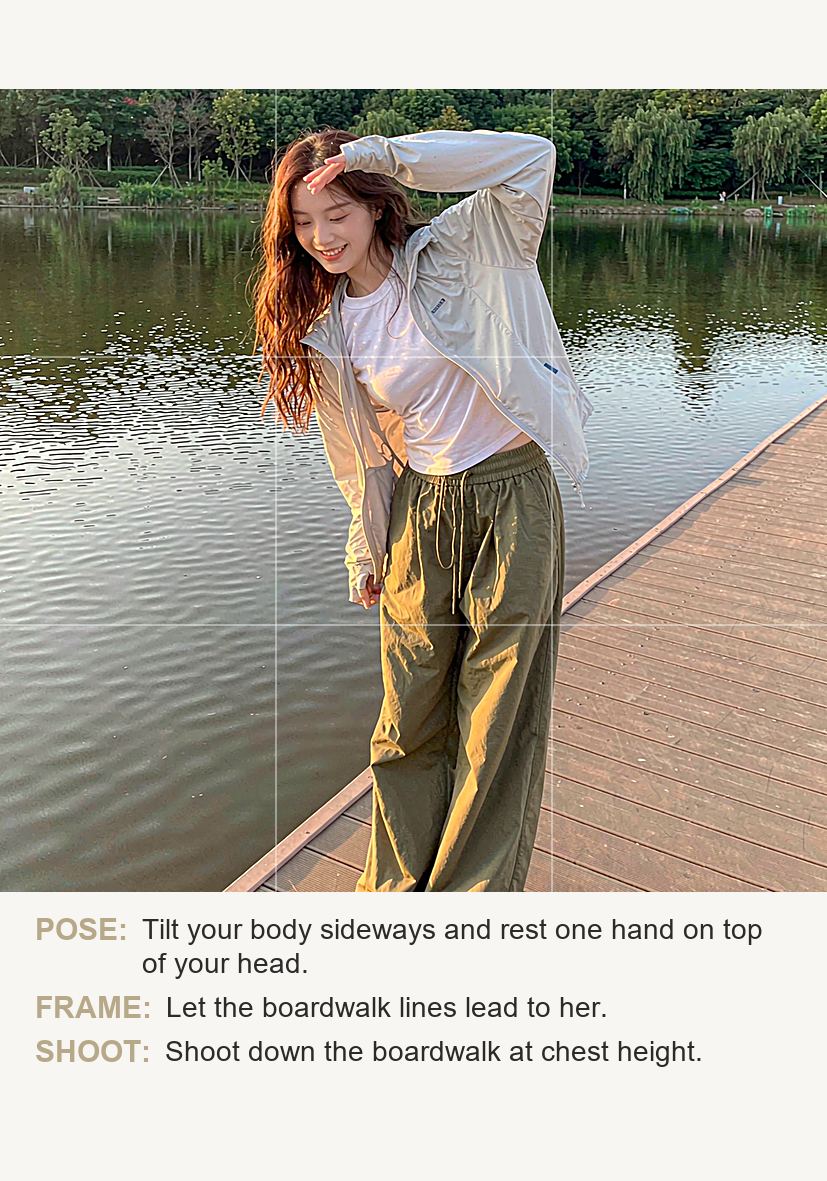
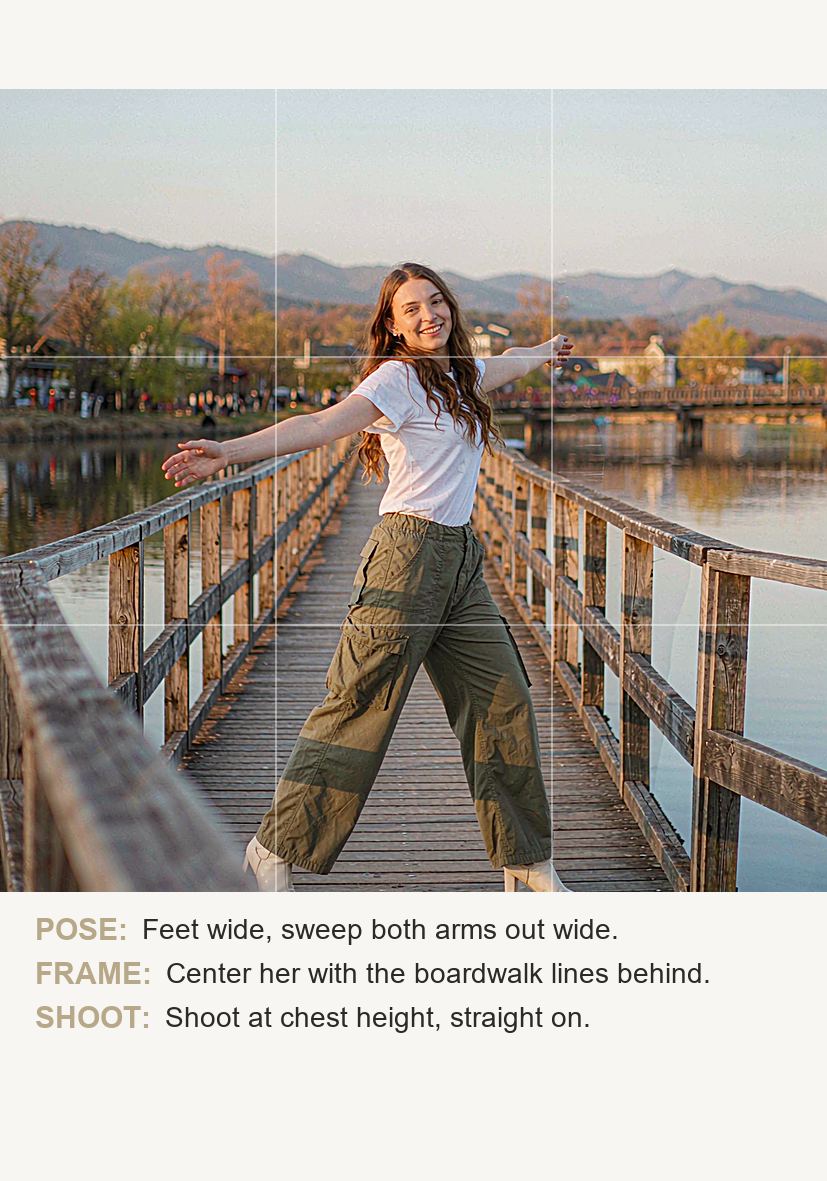
A phone at full brightness in direct sun is still hard to read. You tilt it, you shade it with your body, you angle away from the light. A matte card does not have that problem. It reads at any angle, and it does not throw the sky back into your eyes.
Wind is the second
A single card needs one thumb. A booklet needs two hands and a flat surface. That is the entire reason the deck is printed as separate cards instead of a small book. You take one out, put it in a pocket or hold it against your leg, and the rest stay in the bag. None of that is a design flourish. It is what survived the beach.
The hand-off
The real function of the physical card is the hand-off. You give it to the person being photographed, and for the next thirty seconds they hold the instruction instead of waiting for you to shout one over the surf. You can hand over a phone too, but then they are holding your phone, and a phone in the hand is a thing people look at rather than a thing they read.
Why three lines and not four
POSE, FRAME, SHOOT. Each line answers one question: what do I do with my body, where does the camera go, what do I press. Three is what fits, at a size you can read at arm's length without glasses, on a card you can hold in one hand. That size is not arbitrary. It is the size you need when the person holding the card is two metres away and the light is going.
What print costs you
Print is fixed. A typo stays a typo for the life of the run. You cannot push an update to a card the way you push one to a page. That constraint is why the instructions are written as body positions and camera positions rather than as trends. A shoulder turn will still make sense in five years. Whatever is fashionable on a feed this month will not.
It is also why anything new goes online. The last card in the box carries a QR code, and scanning it opens the rest of the pose library on a phone, grouped by situation. Those extra poses are online, not more printed cards. 75 cards is what is printed and what is in the box.
If you teach, this matters in one specific way. Hand out a single card per pair, give them two minutes, then ask which of the three lines they ignored. It is almost always FRAME. The card did not fail. They read it like a caption instead of like an instruction, and that is the lesson, and it takes one card to teach it.
Browse the pose library - real example cards, grouped by situation, free to read.
See the pose ideasPocket Photo Guide: 75 printed cards in the box. Scan the code on the last card to see the rest of the pose library online - those extra poses are online, not more printed cards.
We are looking for retailers and distributors worldwide. If this is something you would put on your own shelf, write to us at info@onsightverify.com.