In an ordinary television show you know within half a second that you are in the past. The picture goes warm, or cold. The edges soften. The room tone gets a little hollow. A date appears in the corner in a serif font nobody uses anywhere else.
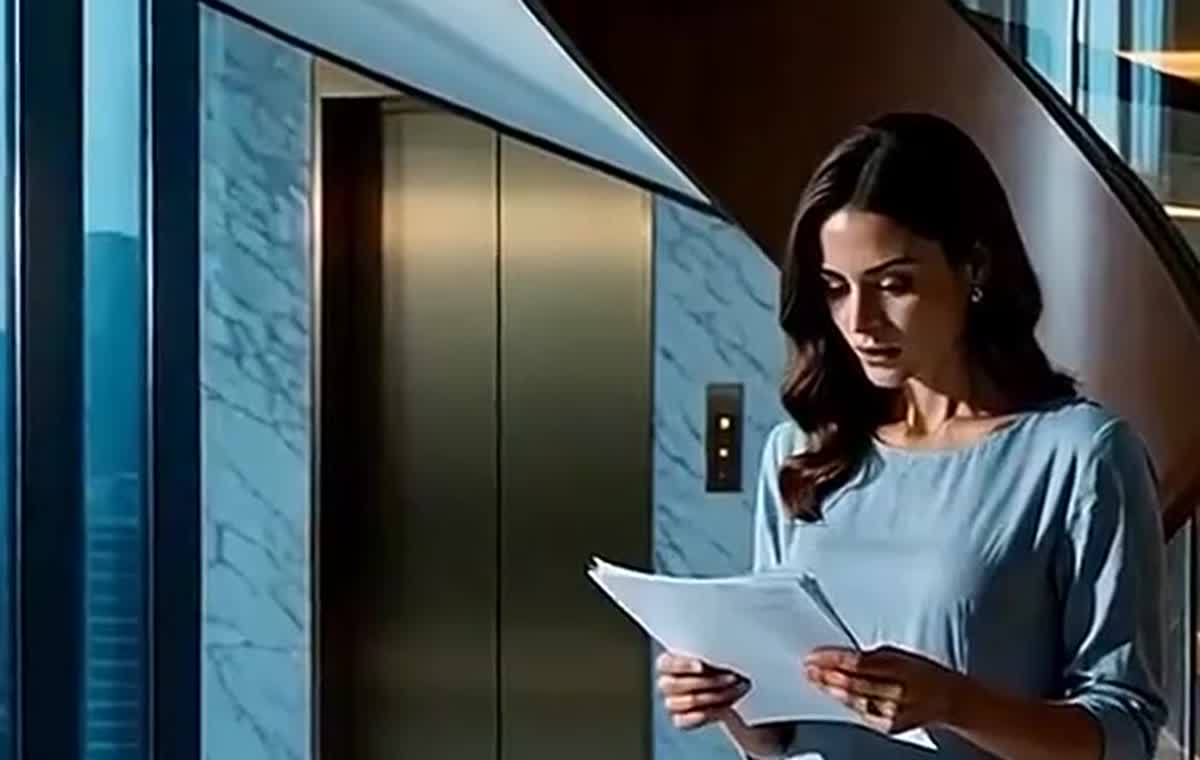
In a vertical drama, none of that happens. The flashback is shot in the same apartment, on the same sofa, with the same lens and the same flat white light. The mother wears the cardigan she wears in episode forty. The office has the same potted plant standing in the same corner. Then someone says “three years ago” and you realise you have been watching the past for the last forty seconds without knowing it.
Two timelines, one set
A real period jump costs money in a way that is easy to underestimate. Two sets. Two lighting plans. Two wardrobes. A grading pass to separate them. Sometimes a younger actor. A vertical drama spends on an entire season what a broadcast episode spends on catering, so the past gets filmed in the room that is already lit, by the crew that is already standing there.
You would expect this to make the show look cheap, and it does, slightly. But it also does something accidental and useful: it makes the past feel unfinished. The past in these shows is not a memory being politely revisited. It is an argument that is still being had. Everyone is still standing in the room where it happened, in the same clothes, and nobody has moved on, because nobody has physically moved.
That is emotionally accurate for the story being told. Almost every one of these plots is about a debt from years ago that has not been paid. Filming the debt in the same room as the collection is, whatever the reason, the right instinct.
What it does to the actor
Strip away the wigs and the filters and the actor has nothing left but behaviour. Same light, same sofa, same coffee cup — so the time jump has to live in posture, in how they hold the cup, in whether they look at the other person directly or over their shoulder. The good ones do it with their eyes for about two seconds and it is the closest this format gets to craft. The bad ones change their hairstyle and hope.
How to tell where you are
Three tells, in order of reliability.
First, manners. In the present timeline nobody in these shows is polite. People interrupt, they sit down uninvited, they answer a question with a question. In a flashback, people knock. They wait to be offered a seat. They thank the housekeeper by name. So if a scene opens and two people are being courteous to each other, check the clock — you are probably three years back.
Second, exposition. Characters in a flashback explain things to each other that they both already know, because the audience does not. “You are marrying him for the family, not for love.” Nobody says that to a person who already knows. That sentence is not dialogue, it is a caption wearing a costume.
Third, hair. It is the cheapest shortcut in the business and the one they reach for most: the same face, one decade younger, identified entirely by a fringe.
Why it survives
The format has no patience for a period look. You get maybe eight seconds before a viewer decides whether to keep going, and a dissolve or a title card is eight seconds of nothing. So the past arrives without announcement and leaves without one, and the audience is trusted to catch up. They usually do, faster than the people who made the show expected.
I have started treating the confusion as a feature. When I cannot tell whether a scene is now or then, I keep watching to find out — which is precisely what the episode wanted from me. Whether that was a decision or a budget line, it works.
The series I keep using as my example is on this page. Search code 5626185 gets you in without hunting for it.
Disclosure: I promote this app through a referral link and may earn a commission if you download through it. It costs you nothing extra, and I would say the same things about these shows either way.