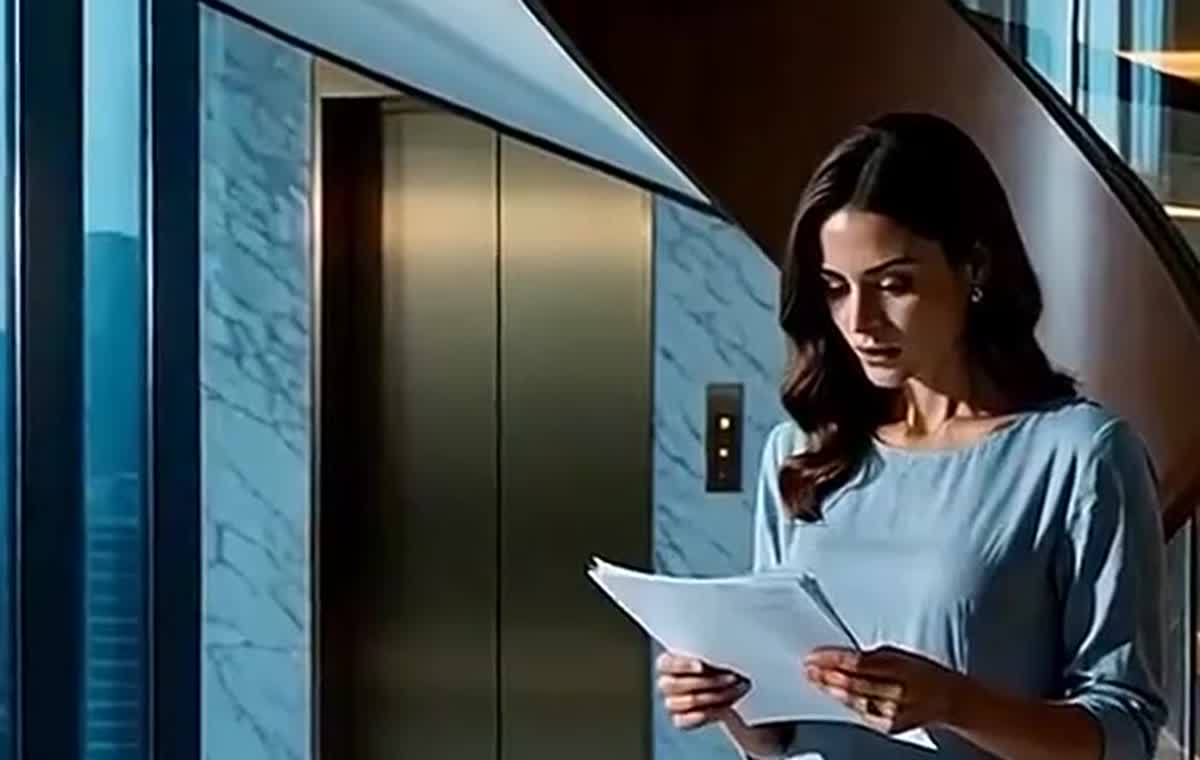
The first thing everyone notices about a vertical drama is the budget, or the lack of it. One apartment. One office corridor. A restaurant with exactly four tables. A crowd scene is six extras walking the same direction twice. Ten years ago this would have been an insult; today it is the most-watched television format in the world, and I think the two facts are connected.
Where the money does not go
A one-minute episode has no establishing shots, no night exteriors with lighting rigs, no second unit, no costume changes across decades. The entire production design fits in a van. That is not a failure to spend; it is a decision about what a viewer at arm's length actually looks at. At the scale of a phone screen, a face is the size of a cinema poster. Budget that would have bought a helicopter shot is visibly better spent on a lead actor who can hold a silent close-up.
The three-room rule
Watch any series in this format and count the locations. It rarely passes five, and the story is engineered to fit them: the office, the apartment, the lobby, the car, the hospital. What looks like cheapness is actually a writing constraint, the way a sonnet's fourteen lines are a constraint. A story that never leaves three rooms has to generate its drama from people rather than places, and when that works, it works anywhere.
What the format hides, and what it cannot
Sound is where the savings are most audible. Walla, foley, ambient beds: all trimmed, because half the audience watches with the sound off anyway. Music does the lifting that effects would do in a bigger show, and you notice it most in the reveals, where a sting arrives precisely on time. If you watch on a speaker, none of this reads as cheap. Put it on a television and the seams show immediately. These shows are engineered for the screen they will actually be seen on, which is more than a lot of prestige television can say.
The honest trade
You will notice reused sets across different series from the same studio. The leading man from one show is the villain in the next. A penthouse reappears with different furniture. None of this hurts the experience, because nobody comes to a one-minute episode for production value. They come for the turn at the end, and the turn costs nothing to shoot. If the format ever matures, it will not be because the budgets grew; it will be because the writing got better inside the same three rooms.
If you want to see for yourself
The series I use as my example in most of these pieces is The Double Life of My Billionaire Husband — the whole thing could be shot in a hotel. The ten-second preview and the episode list are at https://onsightverify.com/drama/ , and if you already have the app, search code 5626185 opens it directly.
---
Disclosure: I promote this app through a referral link and may earn a commission on downloads. The opinions, including the complaints about sound mixing, are my own.